硅胶垫撕下来后会留下残留胶水吗?

告别清洁难题!硅胶垫防残留粘合剂性能的全面工艺控制指南

各位数码配件、家居用品批发商、品牌代工厂负责人请注意!曾经有一位客户,由于硅胶垫撕下后残留胶渍,导致整批订单不得不返工,直接损失超过一百万元。胶渍不仅难以清除,还会严重影响下游客户的信任度,导致复购率下降30%。其实,只要掌握“原材料+工艺+检测”三重管控,就能实现撕下后零残留,稳定控制0.1%的超低缺陷率,保证交付质量!

第一道防线:升级原材料,杜绝残留胶水!定制硅胶垫必须采用环保低粘度硅胶,并添加特殊的抗迁移添加剂,防止增塑剂沉淀造成残留胶水。搭配PET离型膜(硅油涂层量2-3g/㎡),确保硅胶与离型膜紧密粘合但不粘连,彻底消除材料残留胶水的潜在风险。拒绝使用回收材料和劣质胶水,从源头把控产品纯度。

第二道防线:工艺控制提升剥离性能!硫化温度严格控制在150-170℃,保温时间精确到秒,避免过度硫化导致硅胶分子过度交联,影响剥离效果。胶层厚度均匀控制在0.2-0.5mm,采用逗号刮涂技术,确保胶层平整无气泡,提高硅胶贴片与基材的粘合力,提升剥离的洁净度。

第三道防线:多维测试+场景模拟,杜绝隐患!每批次抽取15%的样品进行百格测试(网格间距1mm)和180°剥离测试(剥离力0.5-1.2N/cm)。只有撕开后基材表面无残留胶的样品才被视为合格。此外,还增加了72小时高温(60℃)老化测试和96小时室温放置测试,以模拟实际使用场景,确保硅胶垫在不同环境下撕开后仍无残留胶。不合格产品直接剔除,确保交付的硅胶垫不存在残留胶的风险。

无论您是数码配件批发商、品牌代工厂,还是需要定制装饰或固定产品,您是否担心硅胶垫撕下后残留胶会影响您的声誉?点击在线客服或直接致电,告知我们采购数量和使用场景,我们将为您提供全套防残留胶解决方案,支持检验报告验证和小批量试订单,帮助您稳定控制质量,消除售后纠纷!

硅胶产品采用批量包覆成型工艺,容易脱粘?三大防脱粘解决方案,缺陷率仅为0.2%。

无忧批量生产:硅胶产品包覆成型及粘合失效全过程控制综合指南

敬请橡胶及塑料配件批发商、设备铸造厂经理们注意!某客户曾因硅橡胶涂层产品大规模脱粘而蒙受数百万损失——硅橡胶与金属/塑料基材之间的强制分离和界面分层不仅导致整批产品返工报废,还延误了交货期,损害了品牌声誉。事实上,通过掌握“基材预处理+材料适配+多维检测”三大核心解决方案,并结合PFMEA风险控制,可以实现0.2%的超低缺陷率,稳定保障批量生产产品的质量!

第一步:基材预处理,奠定牢固的粘合基础!对于金属基材,采用“喷砂+硅烷偶联剂(KH-550)”双重处理。喷砂后,表面粗糙度控制在Ra1.6-3.2μm,偶联剂涂层厚度为1-3μm,然后在80℃下干燥。对于塑料基材(如PP/PE),首先使用等离子刻蚀(Ar/O₂混合气体,100W/30s)将表面能提高到≥40mN/m,然后涂覆专用底涂剂(3M DP100),必要时设计锯齿状凹槽(深度0.2-0.5mm)以增强机械互锁。彻底去除基材表面的氧化层和残留脱模剂是防止硅橡胶制品脱粘的关键前提。

第二步:材料和工艺的双向调整,以增强界面粘合力!选用含硅烷改性基团的自粘性液态硅橡胶(LSR)(例如瓦克ELASTOSIL® LR 3030)。对于高温基材(PPS/PEEK),使用耐温≥250℃的加成型硅橡胶(例如信越KE-3470)。控制粘合层厚度在0.3-0.5mm,以达到“硅材料断裂而不脱粘”的效果。工艺方面,采用梯度硫化模式:模具温度160-180℃,保压120-180s,高压情况下进行二次硫化(180℃×2h)。通过分阶段注射压力(第一阶段80MPa,第二阶段50MPa)避免气泡残留。

第三步:多维度严格检验+工况模拟,消除潜在风险!抽取15%的批次样品,通过划格试验(网格间距1mm)和拉伸剪切试验(剥离强度≥12N/cm)测试粘合性能,同时进行100℃沸水浸泡2小时、-40℃~85℃高低温循环500次以及96小时盐雾试验,模拟极端工况。严格按照GB/T 1408.1标准进行评判,直接剔除不合格产品,并通过DOE实验设计优化参数,将脱粘缺陷率控制在0.2%以内,确保交付的硅橡胶产品无脱粘风险。

无论您是硅橡胶制品生产商还是需要定制橡胶涂层产品,您是否担心大批量脱粘会影响交货?点击在线客服或直接致电,告知我们您的工作环境和采购数量,我们将提供全套​​防脱粘解决方案(包括基材处理、材料选择和测试报告),支持小批量试订单和PFMEA风险控制,帮助您稳定控制产品质量,避免售后纠纷。

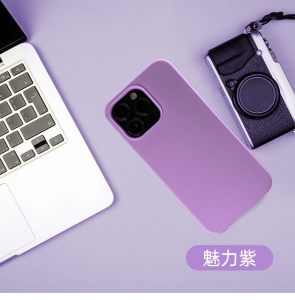
Silicone cases turning yellow in bulk? 168h anti-yellowing + 0.1% defect rate

Bulk quality control and zero yellowing solution, full-process control of silicone case anti-yellowing

Bosses engaged in wholesale of digital accessories and brand OEM (Original Equipment Manufacturing) have once faced situations where million-level orders of silicone cases became unsalable due to batch yellowing. When the products were put into the warehouse, their color was pure and uniform, but yellow spots and color deterioration appeared in a short time. This not only led to concentrated returns from downstream customers but also directly damaged the brand reputation. In fact, by mastering the three-fold control of “raw materials + craftsmanship + testing”, it is possible to achieve 168-hour anti-yellowing performance and an ultra-low defect rate of 0.1%, thus stably ensuring the delivery quality!

First step: Upgrade raw materials to block the source of yellowing! Before customizing silicone cases, it is necessary to use high-purity silica gel with a platinum vulcanization system, adding 0.3%-0.8% UV stabilizers and antioxidants. This can improve the anti-yellowing performance by 80% compared with ordinary materials. Reject recycled materials and inferior color masters. The color master should be a special anti-yellowing type for silica gel, and the addition amount should be controlled within 5% to avoid irreversible yellowing caused by damage to the silica gel cross-linking structure.

Second step: Control the craftsmanship to avoid yellowing due to over-vulcanization! Strictly control the vulcanization temperature at 160-180℃, and adopt a gradient heating mode (preheat at 150℃ for 5 seconds first, then heat up). The risk of yellowing will increase by 30% for every 10℃ increase, so over-vulcanization must be firmly prevented. Thoroughly clean the mold before production to remove residual release agent. New molds need to be baked at 200℃ to remove oil, preventing surface yellow spots caused by impurity migration.

Third step: 168-hour aging test + strict inspection before delivery! Sample 15% of each batch, and conduct a 168-hour anti-yellowing test under the environment of 60℃ with UVA-340 light source in accordance with the standard of GB/T 16422.3-2014. Only those with a yellowing index (YI value) increase not exceeding 2.3 are considered qualified. At the same time, inspect the uniformity of appearance color, eliminate any products with slight yellow spots, and strictly control the defect rate within 0.1% to ensure that the delivered silicone cases have no hidden danger of yellowing.

Whether you are a digital accessory wholesaler, a brand OEM factory, or a purchaser focusing on light-colored/transparent products, are you worried that the batch yellowing of silicone cases will delay the delivery schedule and cause after-sales disputes? Click on the online customer service or call directly, inform us of the purchase quantity and product requirements. We provide full-process anti-yellowing control services, support the verification of 168-hour anti-yellowing test reports, and offer small-batch trial orders to help you deliver stably and eliminate after-sales concerns!

Is the mold cost for silicone bag high?

Say goodbye to high-cost mold opening! Practical strategies to reduce costs in custom silicone bag production

Attention bosses engaged in digital accessories wholesale and brand OEM manufacturing! When customizing silicone bags, the high mold cost has become a major headache for many purchasers. Small-batch orders result in meager profits after cost allocation, while large batches risk inventory backlogs. However, by combining process selection, cooperation models, and design optimization, you can significantly reduce costs while ensuring quality, steadily maintaining profit margins!

First tip: Choose the process based on order quantity! For small-batch customization (<100 pieces), prioritize silicone replication molding. The mold cost is only 2,000-5,000 yuan, and mold opening and mass production can be completed in 3-7 days, which is suitable for new product sampling or niche needs. For medium batches (500-5,000 pieces), select compression molding with a mold cost of 10,000-50,000 yuan. When the order exceeds 500 pieces, the allocated cost is 60% lower than that of replication molding. For orders of 10,000 pieces or more, directly choose liquid injection molding. Although the initial mold cost for silicone bags is higher, the unit cost shows a significant decreasing effect, and the scrap rate is less than 3%, making it more cost-effective in the long run.

Second tip: Reduce costs through batch integration and policy dividends! Integrate similar needs from multiple customers and produce with unified specifications. By increasing the order quantity, the negotiation space for mold costs can be increased by 30%. Sign long-term framework agreements with suppliers and adopt the “basic mold cost + unit sales share” model, which can reduce the initial investment by 40%. What’s more, some manufacturers offer policies such as 50% mold cost refund when mass production reaches 5,000 pieces and full refund for 10,000-piece orders, further spreading the costs.

Third tip: Modular design reduces costs without compromising quality! Adopt a modular mold structure. When modifying product models later, only 30% of the mold components need to be changed, saving 60% of secondary development costs. Simplify unnecessary complex structures of silicone bags, reduce undercuts and precision textures, and lower mold processing difficulty, which can directly reduce mold costs by 25%-50%. It is essential to conduct small-batch tests before mass production to avoid mold rework due to design issues, which would add extra costs.

Whether you are a digital accessories wholesaler, a brand OEM factory, or need to customize storage silicone bags, and are worried that high mold costs will squeeze profits? Click on the online customer service or call directly, inform us of your order quantity and needs. We provide process adaptation, tiered mold cost refund policies, and support small-batch trial orders (as low as 100 pieces), helping you reduce costs, increase efficiency, and ensure stable delivery!

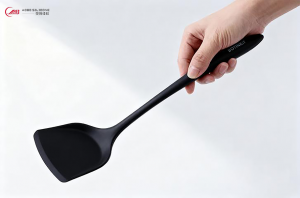
Silicone spatulas with mass degumming issues? One-piece molding technology eliminates hidden dangers!
Say goodbye to glue failure and rework! Silicone spatulas with integrated molding for quality control

Worried about mass-produced silicone spatulas getting unglued and needing rework after bulk purchasing? If you’re in kitchenware wholesale or OEM, you must read this! —— Separation of the spatula head from the handle, cracking after high-temperature use, not only leads to concentrated returns from downstream customers but also directly damages the brand reputation. In fact, choosing the right integral molding process and implementing 3 key controls can fundamentally eliminate ungluing and steadily maintain the delivery rate!

First step: Lock in the integral molding process! Abandon the traditional silicone spatula bonding process and adopt high-temperature vulcanization integral molding technology to seamlessly integrate the silicone material with the handle frame, eliminating the hidden danger of ungluing structurally. Before mass production, it is necessary to trial-produce 50-100 samples. After being steamed at 200℃ for 2 hours and subjected to 1000 repeated bending tests, production can proceed only if there is no loosening or ungluing.

Second step: Adaptation of raw materials and processes! Use food-grade silicone that meets the GB4806.11 standard, combined with special bonding additives, to ensure compatibility between the silicone and handle materials (wood, plastic, metal). Control the vulcanization temperature between 160-180℃ and the holding time to the second to avoid weak bonding due to deviations in process parameters.

Third step: Strengthen durability through finished product sampling inspection! Conduct sampling inspections at 15% of the batch. In addition to checking for no burrs on the appearance and meeting size standards, focus on ungluing tensile tests (tensile force ≥50N is considered qualified) and high-temperature working condition simulation tests. Unqualified batches are directly reworked and never flow into downstream channels. Choosing suppliers that support integral molding technology fundamentally reduces the risk of after-sales issues caused by ungluing.

Whether you’re a kitchenware wholesaler, brand OEM factory, or catering supply chain purchaser, worried that mass ungluing of silicone spatulas will affect your business? Click on the online customer service or call directly. We provide high-quality silicone spatulas with integral molding technology in bulk, support verification of inspection reports and small-batch trial orders, helping you purchase with confidence and no after-sales worries! Mass ungluing? Integral molding technology eliminates hidden dangers!

Say goodbye to ungluing and rework! Quality control of silicone spatulas with integral molding

Worried about mass-produced silicone spatulas getting unglued and needing rework after bulk purchasing? If you’re in kitchenware wholesale or OEM, you must read this! —— Separation of the spatula head from the handle, cracking after high-temperature use, not only leads to concentrated returns from downstream customers but also directly damages the brand reputation. In fact, choosing the right integral molding process and implementing 3 key controls can fundamentally eliminate ungluing and stea

Second step: Adaptation of raw materials and processes! Use food-grade silicone that meets the GB4806.11 standard, combined with special bonding additives, to ensure compatibility between the silicone and handle materials (wood, plastic, metal). Control the vulcanization temperature between 160-180℃ and the holding time to the second to avoid weak bonding due to deviations in process parameters.

Third step: Strengthen durability through finished product sampling inspection! Conduct sampling inspections at 15% of the batch. In addition to checking for no burrs on the appearance and meeting size standards, focus on ungluing tensile tests (tensile force ≥50N is considered qualified) and high-temperature working condition simulation tests. Unqualified batches are directly reworked and never flow into downstream channels. Choosing suppliers that support integral molding technology fundamentally reduces the risk of after-sales issues caused by ungluing.

Whether you’re a kitchenware wholesaler, brand OEM factory, or catering supply chain purchaser, worried that mass ungluing of silicone spatulas will affect your business? Click on the online customer service or call directly. We provide high-quality silicone spatulas with integral molding technology in bulk, support verification of inspection reports and small-batch trial orders, helping you purchase with confidence and no after-sales worries!

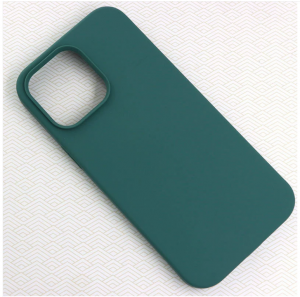
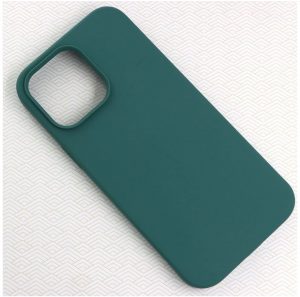
Does the silicone soft case not fit properly?

Say goodbye to misaligned holes! The silicone soft case fits precisely

Bosses engaged in wholesale mobile phone accessories and brand foundry operations, when purchasing silicone soft cases in bulk, the biggest fear is falling into the trap of poor fit! Issues such as misaligned camera holes, unpressable buttons, and warped edges not only lead to a wave of returns from downstream customers but also directly damage the brand’s reputation. In fact, by focusing on 3 core control points, you can eliminate fit problems at the source and steadily maintain the delivery rate!

First checkpoint: Real machine mold opening + CNC precision carving calibration! Before customizing silicone soft cases, it is necessary to disassemble and scan the real target model, use CNC to precisely carve the mold, and strictly control the hole position error within ±0.02mm (industry standard is ±0.03mm). Trial-produce 50-100 samples, align the concentricity of the camera holes and the fit of the charging port one by one, test the button stroke to be ≥0.8mm, and confirm that all functions are normal before starting mass production to avoid the entire batch being scrapped due to mold deviations.

Second checkpoint: Fine-tune the shrinkage rate according to the model! Silicone materials will naturally shrink during molding. The shrinkage rate for regular models is controlled at 1.2%-1.5%, while for curved screen and foldable screen models, it needs to be reduced to 1.0%-1.3%. During production, sample installation is carried out every 2 hours, and the deviation of the frame thickness is measured with a micrometer to ensure that the silicone soft case fits the phone body without looseness or film lifting, especially avoiding the frequent problem of edge warping on curved screens.

Third checkpoint: Full inspection before delivery + simulated use testing! Sample 15% of the batch (higher than the industry standard of 10%). In addition to checking hole positions and buttons, 24-hour high-temperature (60℃) aging tests and 100 disassembly and assembly wear tests are added to ensure that the silicone soft case does not deform or loosen after long-term use. Unqualified products are directly rejected and never flow into downstream channels, reducing after-sales risks from the source.

Whether you are fitting regular models, curved screens, or foldable screens, and worried about batch fitting failures of silicone soft cases? Click on the online customer service or call directly, inform us of the target model and purchase quantity. We support real machine mold opening for 98% of mainstream models, with full-process quality inspection + defective rate controlled below 0.3%, and support small-batch trial orders to help you deliver safely without worries!


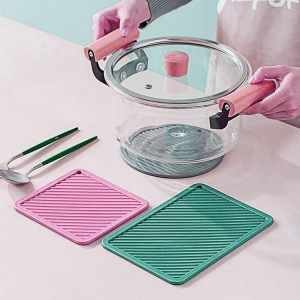
How to control costs in bulk purchasing of silicone pads?

Reject ineffective expenditures! A cost-control guide for bulk purchasing of silicone pads

Attention to bosses engaged in kitchenware, electronic accessories wholesale, or brand OEM! Is the high cost of bulk purchasing silicone pads directly squeezing your profit margins? In fact, by mastering 5 practical skills, you can accurately control costs while ensuring quality, and avoid wasting money!

First trick: Purchase directly from the source to save intermediate fees! Skip multi-level distributors and connect directly with silicone pad manufacturers. Not only can you get factory prices, but also avoid price markups by middlemen. Priority should be given to factories near silicone raw material production areas, as the raw material transportation cost is lower and there is more room for bulk price negotiation.

Second trick: Standardize specifications to reduce losses! Unify the thickness, size, and process standards of silicone pads to reduce the number of custom mold openings and lower mold costs. For example, integrate similar needs from different customers and adopt general specifications for production, which can not only improve production efficiency but also reduce waste of leftover materials.

Third trick: Balance prices by placing bulk orders in batches! Predict inventory based on market demand and adopt the “large orders with batch delivery” model. This way, you can enjoy the low-price advantage of bulk purchasing while avoiding capital occupation and silicone aging losses caused by inventory backlogs.

Fourth trick: Optimize the silicone material formula! Choose the appropriate silicone grade according to the usage scenario, without blindly pursuing high-end materials. For example, select regular food-grade silicone for ordinary civil scenarios and customize special silicone as needed for industrial scenarios, reducing raw material costs while meeting requirements.

Fifth trick: Integrate logistics and warehousing to reduce miscellaneous fees! Collaborate with peers to share logistics costs through group purchasing and transportation; choose warehouses close to sales areas for stockpiling to shorten delivery distances and reduce damage losses during transportation.

Whether you are a silicone pad wholesaler, a brand OEM factory, or an enterprise purchaser, want to accurately control the cost of bulk purchasing? Click on the online customer service or call directly, inform us of your purchasing needs and budget, and we will provide customized silicone pad purchasing solutions, supporting direct supply from the source and small-batch trial orders to help you reduce costs and increase efficiency!


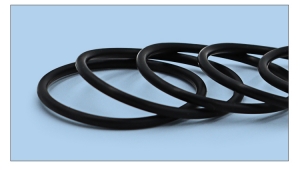
Is the nitrile rubber O-ring oil-resistant?

Analysis of oil resistance performance! Application scenarios and selection skills of nitrile rubber O-rings

Bosses who purchase mechanical parts and hydraulic equipment, pay attention! When choosing oil-resistant seals, you often wonder whether nitrile rubber O-rings are reliable. In fact, as a classic oil-resistant material, nitrile rubber performs excellently in most oil medium scenarios, but the selection needs to be based on specific working conditions to avoid mistakes!

The oil resistance of nitrile rubber O-rings stems from their molecular structure. They have good resistance to non-polar oils such as mineral oil, hydraulic oil, and lubricating oil. Within the temperature range of -40℃ to 120℃, they can maintain stable sealing performance, and are widely applicable to oil sealing scenarios in the automotive, machinery, hardware and other industries. However, it should be noted that their resistance to gasoline and strong polar solvents is weak. For such working conditions, fluororubber materials are recommended.

There are 3 key points for B-end selection: first, confirm the type of oil medium. For non-polar oils, nitrile rubber O-rings are preferred; for polar oils, the material needs to be replaced. Second, verify the temperature resistance and pressure parameters. For high-temperature scenarios exceeding 120℃ or high-pressure scenarios, a backup ring should be used. Third, ask for test reports to ensure compliance with the GB/T 3452.1 standard and qualified oil resistance performance test certificates.

Before bulk purchasing, it is essential to conduct small-scale tests to simulate actual working conditions and test the sealing effect and durability. This avoids mass leakage due to material mismatch, which may cause cost losses and impact on brand reputation.

Whether you are a mechanical parts wholesaler, equipment manufacturer, or hydraulic system purchaser, worried about improper selection of oil-resistant O-rings? Click on the online customer service or call directly, inform us of the working condition parameters, and we will provide sealing solutions with multiple materials such as nitrile rubber, support the verification of test reports and small-batch trial orders, to help you select the right type accurately!

How to ensure the batch quality of silicone spatulas?

Reject mass failures! How to control the quality of silicone spatulas

Attention, bosses engaged in kitchenware wholesale and brand OEM! When purchasing silicone spatulas in bulk, you might worry about inconsistent quality. Once issues like yellowing, deformation, or peculiar smells arise, it will not only cost you money but also damage your brand reputation. In fact, mastering 5 key control links can steadily ensure the quality of bulk products!

First, strictly control raw material selection! You must use food-grade silicone raw materials that meet the GB4806.11 standard, ask for raw material testing reports, and eliminate recycled or inferior materials. Before mass production, conduct small-scale trials to test the raw materials’ resistance to high and low temperatures (-40℃~230℃) and anti-yellowing performance, so as to avoid quality hazards from the source.

Second, strictly control the production process! Vulcanization temperature and time should be standardized to prevent under-vulcanization or over-vulcanization, which can cause uneven hardness and easy breakage of silicone spatulas. At the same time, assign on-line quality inspectors to monitor the molding process in real-time and promptly remove unqualified semi-finished products with edge burrs, bubbles, etc.

Third, strengthen finished product testing! Conduct sampling inspections at 5%~10% of the batch quantity, focusing on checking appearance (no scratches, uniform coloring), performance (stretch rebound, high-temperature cooking resistance), and safety indicators (heavy metals, harmful substance precipitation). Only products that pass the inspection can be stored in the warehouse, and all unqualified batches must be reworked.

Fourth, standardize warehousing and logistics! Finished products need to be stored in a cool and dry warehouse to avoid accelerated aging caused by direct sunlight and high-temperature humid environments. In the logistics link, do a good job in protective packaging to prevent extrusion deformation during transportation, ensuring that the silicone spatulas delivered to customers are intact.

Whether you are a kitchenware wholesaler, a brand OEM factory, or a catering supply chain purchaser, are you worried about unstable batch quality of silicone spatulas? Click on the online customer service or call directly. We provide bulk supply services with full-process quality control, support verification of test reports and small-batch trial orders, helping you purchase with confidence!

How to evaluate the technical strength of a silicone rubber factory?

Don’t just look at the scale! Identify the authenticity of a silicone rubber factory’s technical strength from these 4 points

Looking for a silicone rubber factory to cooperate with? Just hearing claims like “ten years of experience” or “annual output of 10,000 tons” is not enough. Technical strength is the core of reliable products. In fact, you can see through it from 4 details. When purchasers and enterprises choose a factory, following these details can help avoid 90% of the pitfalls! First, check if the R&D team is strong. A truly capable factory will have dedicated formula R&D engineers who can adjust hardness and temperature resistance according to working conditions. For example, when making seals for new energy vehicles, they can increase the temperature resistance of silicone rubber to 250°C without deformation. Those who can’t even explain “Shore hardness” are probably not reliable in terms of technology.

Then, check how sophisticated the production equipment is. Reliable manufacturers use fully automatic vulcanizing machines and laser thickness gauges, which can control production errors within 0.02mm, resulting in silicone products with smooth edges and no burrs. Small workshops use old equipment, leading to products that are either inaccurately sized or unevenly vulcanized, which crack when used.

Testing capabilities are also crucial. Regular factories have a complete set of testing equipment to measure the aging resistance and chemical resistance of silicone, and each batch of goods is accompanied by a test report. Those without testing capabilities rely entirely on “visual inspection,” resulting in low product compliance rates and prone to quality disputes in the later stage.

Check if the customized cases are authentic. Those that can handle high-demand orders in medical, aerospace, and other fields must have qualified technologies. For example, when manufacturing components for surgical instruments, they can achieve non-toxic, odorless, and disinfection-resistant properties. Those that only produce general-purpose products and dare not take on complex customization orders are mostly of average technical level.

Whether you are looking for a silicone product supplier or need customized special silicone products and want to assess the technical strength of the manufacturer? Click on the online customer service or call us. We provide the qualifications of the R&D team, equipment lists, and testing reports, and help you evaluate the strength of potential合作 factories for free, making your cooperation more assured!