
文章

Having trouble passing the quality inspection for silicone cases? 3 core rectification plans to pass the inspection in one go

Must-see for mass production! A complete guide to passing silicone case quality inspections

When digital accessory manufacturers conduct mass production, they often encounter difficulties in passing quality inspections. In minor cases, this may delay delivery cycles; in severe cases, it can increase rework costs and affect the reputation of downstream collaborations. In fact, by identifying the core pain points in inspections and making targeted improvements, one can efficiently pass various standard certifications.

First hurdle: Rectification of material compliance. One of the core reasons why silicone cases fail quality inspections is substandard materials. It is necessary to use food-grade or electronic-grade special raw materials, eliminate recycled materials and inferior additives, ensure that the content of harmful substances such as heavy metals and phthalates meets national/European standard limits, and provide third-party material testing reports to avoid compliance risks from the source.

Second hurdle: Optimization of dimensional accuracy. Hole position deviation and excessive edge tolerance are frequent deduction items. It is necessary to adopt 1:1 CNC modeling of the real machine, control the mold accuracy within ±0.01mm, add a full inspection process after vulcanization molding, and calibrate hole positions, key fit, and frame thickness one by one to avoid poor assembly caused by dimensional deviations of the silicone case.

Third hurdle: Enhancement of performance indicators. Failure to meet performance requirements such as scratch resistance, yellowing resistance, and high and low temperature resistance will directly lead to inspection failure. During the production of silicone cases, anti-scratch and wear-resistant additives need to be added, and the surface should adopt plasma polishing technology; UV aging tests (no obvious yellowing after 48 hours) and high and low temperature cycle tests (-40℃~85℃ stable without cracking) should be conducted to ensure that all performance indicators meet the inspection requirements.

The key to passing the quality inspection of silicone cases lies in three core aspects: material compliance, dimensional accuracy, and performance compliance. If you are a digital accessory manufacturer troubled by quality inspection problems, please feel free to send a private message or call us for consultation! Inform us of the product model and testing standards, and we will provide customized rectification plans and high-quality raw material support to help you pass the inspection in one go during mass production!
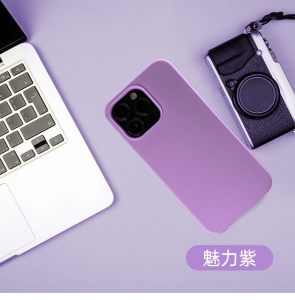
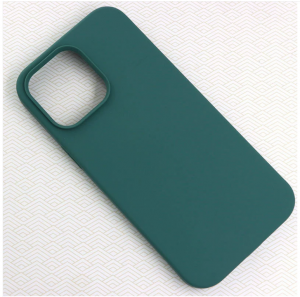
Is the silicone case easy to scratch / easy to break / not fit?

A Complete Guide to Upgrading the Quality of Silicone Protective Cases

Heads of digital accessory wholesale businesses and brand foundries are well aware that the issues of silicone cases being prone to scratches, easy to break, and poor fit are core pain points in bulk deliveries. At best, these issues lead to complaints from downstream customers; at worst, they result in full batch returns, directly squeezing profit margins. In fact, by upgrading the material, structure, and craftsmanship in three aspects, these problems can be solved at the source, ensuring an ultra-low defect rate of 0.3%!

First: Material upgrade to build a durable foundation! High-toughness nano-silicone material is used (Shore hardness 50±2A), with 0.8%-1.2% scratch and wear-resistant additives. It undergoes a 48-hour scratch resistance test (500 grams of steel wool rubbed 500 times with no scratches). At the same time, anti-fall modifiers are incorporated, enabling it to withstand 10 free falls from a height of 1.5 meters without cracking, thus laying a solid foundation for the durability of the silicone case from the material perspective.

Second: Structural optimization to solve the fit problem! A 1:1 CNC modeling of the real machine is adopted, with hole position errors strictly controlled within ±0.02mm. The frame is equipped with a 0.3mm anti-collision airbag structure, and the button area is designed with a slightly convex anti-slip feature, completely solving the problems of poor fit and stuck buttons. A honeycomb buffer layer is added to the back to disperse impact force and reduce the risk of damage from falls.

Third: Process improvement to enhance quality control accuracy! The vulcanization temperature gradient is controlled at 160-180℃, and the pressure holding time is extended to 150 seconds to avoid material brittleness caused by over-vulcanization. The surface is treated with plasma polishing technology to remove burrs and improve smoothness, reducing scratch marks. 15% of the products are sampled for inspection before leaving the factory, covering all dimensions such as fit, scratch resistance, and fall resistance, ensuring that the delivered silicone cases have no quality hidden dangers.

Whether you are a brand foundry focusing on the mid-market or a business deeply engaged in digital accessory wholesale, are you worried that the quality issues of protective cases will hinder delivery? Click on the online customer service or call directly, inform us of your mass production needs, and we will provide customized silicone case quality optimization solutions, supporting small-batch trial orders (as low as 500 pieces) to help you stabilize quality and improve downstream repurchase rates!

Do you need me to elaborate on the structural optimization details of silicone cases for different digital models (such as foldable screens, curved screens)?

Silicone cases turning yellow in bulk? 168h anti-yellowing + 0.1% defect rate

Bulk quality control and zero yellowing solution, full-process control of silicone case anti-yellowing

Bosses engaged in wholesale of digital accessories and brand OEM (Original Equipment Manufacturing) have once faced situations where million-level orders of silicone cases became unsalable due to batch yellowing. When the products were put into the warehouse, their color was pure and uniform, but yellow spots and color deterioration appeared in a short time. This not only led to concentrated returns from downstream customers but also directly damaged the brand reputation. In fact, by mastering the three-fold control of “raw materials + craftsmanship + testing”, it is possible to achieve 168-hour anti-yellowing performance and an ultra-low defect rate of 0.1%, thus stably ensuring the delivery quality!

First step: Upgrade raw materials to block the source of yellowing! Before customizing silicone cases, it is necessary to use high-purity silica gel with a platinum vulcanization system, adding 0.3%-0.8% UV stabilizers and antioxidants. This can improve the anti-yellowing performance by 80% compared with ordinary materials. Reject recycled materials and inferior color masters. The color master should be a special anti-yellowing type for silica gel, and the addition amount should be controlled within 5% to avoid irreversible yellowing caused by damage to the silica gel cross-linking structure.

Second step: Control the craftsmanship to avoid yellowing due to over-vulcanization! Strictly control the vulcanization temperature at 160-180℃, and adopt a gradient heating mode (preheat at 150℃ for 5 seconds first, then heat up). The risk of yellowing will increase by 30% for every 10℃ increase, so over-vulcanization must be firmly prevented. Thoroughly clean the mold before production to remove residual release agent. New molds need to be baked at 200℃ to remove oil, preventing surface yellow spots caused by impurity migration.

Third step: 168-hour aging test + strict inspection before delivery! Sample 15% of each batch, and conduct a 168-hour anti-yellowing test under the environment of 60℃ with UVA-340 light source in accordance with the standard of GB/T 16422.3-2014. Only those with a yellowing index (YI value) increase not exceeding 2.3 are considered qualified. At the same time, inspect the uniformity of appearance color, eliminate any products with slight yellow spots, and strictly control the defect rate within 0.1% to ensure that the delivered silicone cases have no hidden danger of yellowing.

Whether you are a digital accessory wholesaler, a brand OEM factory, or a purchaser focusing on light-colored/transparent products, are you worried that the batch yellowing of silicone cases will delay the delivery schedule and cause after-sales disputes? Click on the online customer service or call directly, inform us of the purchase quantity and product requirements. We provide full-process anti-yellowing control services, support the verification of 168-hour anti-yellowing test reports, and offer small-batch trial orders to help you deliver stably and eliminate after-sales concerns!